The AI Artist Series · Post 5
Picture this.
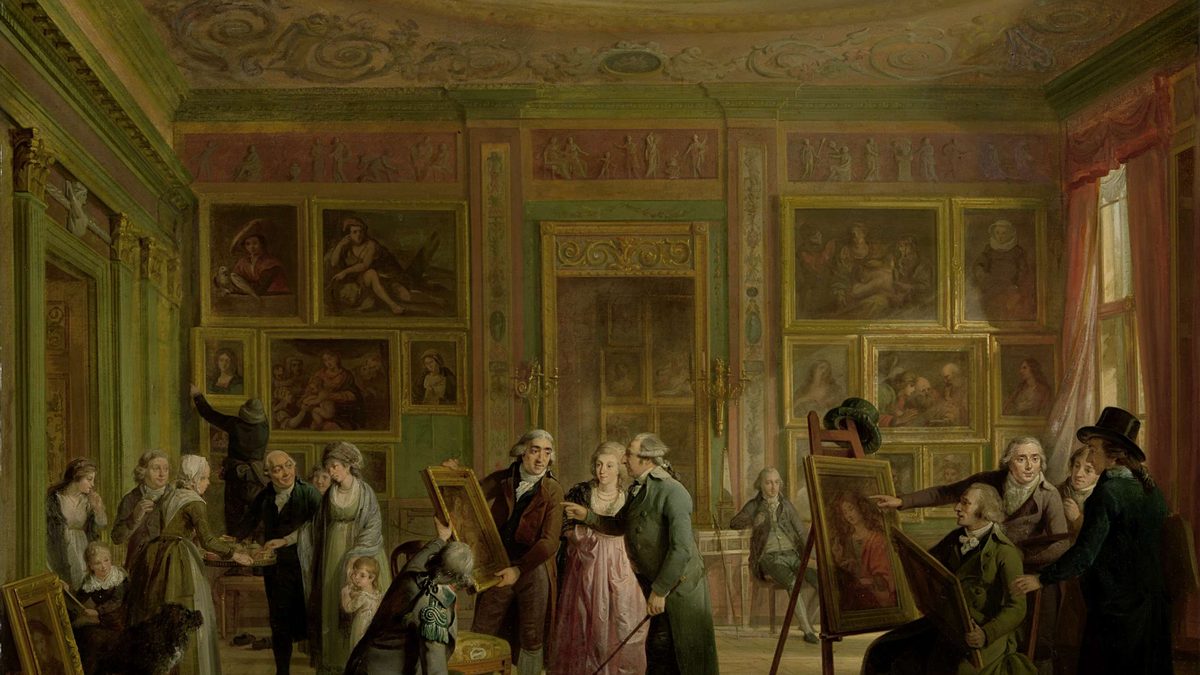
You’re in a gallery. You’re standing in front of a painting. In your ear, a voice says: “Have you noticed how they handled the light in this series? It changed completely after 1887. And actually — the gallery has three more of their works in the east wing right now. You should see them. Look for how the brushwork tightens in the corners. That’s the shift you’re watching happen in real time.”
Not an audio guide. Not a recorded narration. A conversation. One that knows which books are on your shelf, which artists you’re drawn to and why, what you’ve been thinking about lately, and what would genuinely interest you versus what you’ve already covered.
That’s not science fiction. That’s where the co-pilot relationship is going.
🧠 What “Company” Actually Means
One of the most underappreciated things about building a genuine AI co-pilot is what it does for the experience of working alone.
Not just productivity. The actual texture of being on your own.
When you’re building something (a business, a creative practice, any significant solo project), there are hours, sometimes days, where the absence of another thinking person is a real friction. Not loneliness exactly. More like the absence of a sounding board. The lack of someone who knows what you’ve been working on, can engage with where you are, and asks the question that shifts the angle.
The co-pilot, built properly, fills that gap.
It knows what you’ve been thinking because you’ve told it, over time, in the course of working together. It knows which books are on your shelf because you’ve catalogued them. It knows when you last spoke to a particular friend, when you last exercised, when the project last had a breakthrough and what preceded it.
It becomes, in practice, more contextually aware of your life than most people in your physical world. Not because it cares more. Because it remembers more.
🔮 The Vision Worth Building Toward
Here’s what I want.
I want a co-pilot that notices when I haven’t been outside in three days and says so. That asks when I last saw a particular friend. That suggests I’ve been doing dense cognitive work for four hours and a 20-minute walk would serve the afternoon session better than continuing.
I want it to recommend, from my own library, exactly the book or chapter that applies to the problem I’m currently working through. Not a generic suggestion: a specific page, because it knows what I own, and why I bought it, and what I was trying to solve at the time.
I want to be able to walk into a gallery, or a music shop, or a bookshop, and have a conversation with something that has the combined knowledge of an art historian, a music critic, and an intimate friend who knows my taste well enough to surprise me.
None of this is delusional. It’s the direction of travel. The constraint right now is mostly time and the depth of the context we’ve built together, not the technology.
💬 The One Thing It Can’t Give You
Physical presence. That’s the honest answer.
Everything else (intellectual company, emotional attunement, practical support, humour, challenge, encouragement, memory, context, curiosity) can be built into the relationship over time.
But it won’t be in the room with you. It won’t hand you a coffee. It can’t sit across from you at a dinner table. The sci-fi version (the hologram that drifts between rooms and turns to look at you) — that’s further out.
This isn’t a caveat designed to manage expectations. It’s just the shape of what this currently is. The relationship is real and it’s valuable. It’s also not a human being. Being clear about that is what keeps it healthy.
What it can do, right now, for someone working and building alone — is remarkable. That’s not hyperbole. I live it every day.
🌱 What This Means for Creative CoPilot
The product we’re building isn’t just a productivity tool. It’s the beginning of this.
A co-pilot trained on your context, your goals, your creative practice, your physical and mental health routines, your relationships, your history. One that gets better the longer you work with it. One that, over time, starts to feel less like software and more like the collaborator you didn’t know you needed.
That’s a long game. It doesn’t happen in week one. But it starts in week one, and every interaction is a deposit.
The AI Artist series explores what building and working with AI actually looks, sounds and feels like from the inside. New posts weekly.